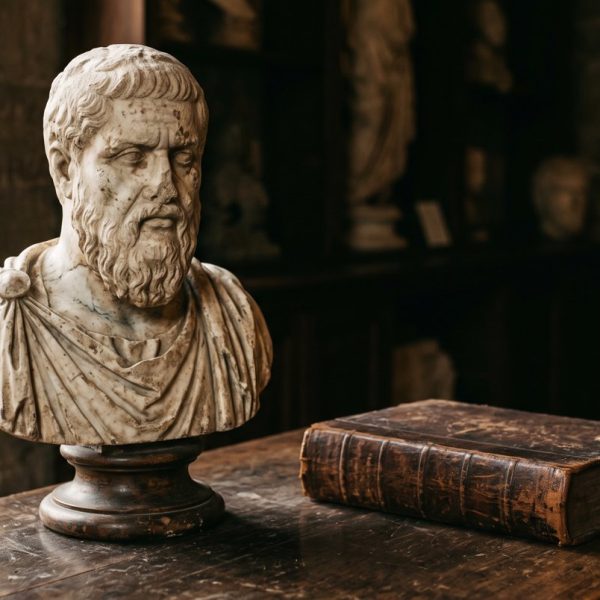
Minor-looking language slips can radically distort complex ideas, especially when it comes to philosophy. A missing comma, a clumsy paraphrase, or an overconfident “correction” can turn a nuanced argument into something a thinker never meant to say. Scholars, students, and content creators who write about thinkers across history must be especially alert to the risks of misrepresentation through language. That is where meticulous editing and proofreading services become more than a formality: they are an ethical safeguard against distorting arguments that shaped entire traditions of thought.
Following ghana celebrities gives fans a front-row seat to the country’s creative boom.
Main Analysis: Common Editing and Proofreading Errors that Distort Philosophical Thought
1. Oversimplifying Complex Sentences into Misleading Soundbites
Many major thinkers write in long, layered sentences full of carefully balanced clauses. An editor who cuts these structures down for “readability” can accidentally delete key qualifications and conditions. In philosophy, those qualifications often carry the entire argument. Reducing a subtle claim to a single, blunt sentence may create a catchy quote, but it can also turn a cautious idea into an extreme one that the author never endorsed.
2. Confusing Everyday and Technical Meanings of Key Terms
Philosophical texts often repurpose familiar words in highly technical ways: “form,” “substance,” “representation,” “subject,” “idea,” and “freedom” are just a few examples. An editor who assumes the everyday meaning of such terms can smooth the prose in ways that destroy accuracy. Replacing technical vocabulary with loose synonyms to avoid repetition may sound stylistically appealing but can erase central distinctions that the original thinker fought hard to define.
3. Ignoring Historical and Cultural Context in Word Choice
Many thinkers responded to the political, religious, or scientific debates of their time. When editing or translating their work today, a phrase that sounds neutral in a modern context may have carried sharp polemical weight in the past. Substituting a softer or more fashionable term can dull the force of the original argument. Conversely, choosing a modern term with strong ideological overtones can make a historical author seem to advocate positions they never held.
4. Misplacing or Removing Crucial Punctuation
Punctuation in dense argumentation is more than a matter of rhythm; it structures reasoning. A comma can mark a qualification, a semicolon can divide steps in an argument, and a colon can signal definition or consequence. Removing “unnecessary” commas, merging sentences, or adding emphatic dashes can alter logical relationships. In argumentative prose, that can turn a distinction into an equation, a hypothesis into a conclusion, or a conditional into an absolute statement.
5. Overzealous Paraphrasing of Famous Passages
Well-known passages from philosophical works are often paraphrased for clarity or brevity, especially in educational materials and blogs. Yet paraphrasing dense arguments is more risky than it may appear. Subtle changes in modality (“may” vs. “must”), time, or scope can shift an argument significantly. Oversimplified paraphrases may then circulate as if they were accurate summaries, spreading a distorted version of a thinker’s ideas through citations, social media, and secondary literature.
6. Smoothing Out Productive Ambiguity
Many influential arguments deliberately retain a certain level of ambiguity or openness. A text might use one term to bridge several layers of meaning at once, inviting interpretation rather than closing it off. Editors intent on clarity sometimes replace these ambiguous phrases with more precise alternatives. While clarity is usually helpful, in this case it can erase the deliberate interpretive space that is central to a theory, leaving readers with a flattened, one-dimensional view of a multifaceted position.
7. Misaligning Pronouns and References
In dense theoretical prose, pronouns like “it,” “this,” “they,” or “we” often point to complex earlier claims rather than obvious, nearby nouns. A well-meaning editor who replaces pronouns with guessed referents, or rearranges sentences without tracking them, risks changing which idea is being affirmed or rejected. In fields where debates hinge on fine distinctions between positions, misaligned references can attribute a view to the wrong side or collapse a critique into an endorsement.
Misrepresenting a philosopher is easy precisely because the original argument depends on terms used in a very particular way. Commercial documents have their own defined terms, and they behave identically under a careless rendering. Organisations that recognise this pattern commission translation services with a review stage instead of buying words by the thousand.
8. Treating Footnotes and Parentheses as Expendable
Apparent asides—footnotes, endnotes, and parenthetical remarks—often contain vital clarifications, caveats, and definitions. Cutting or condensing them to streamline the main text might seem like a harmless space-saving measure, but these notes often indicate limits, exceptions, or alternative readings. When they disappear, readers may be left with an overstated or unqualified version of an argument, making a careful thinker look reckless or dogmatic.
9. Disrupting the Structure of an Argument with Layout Changes
Section headings, paragraph breaks, and enumerated points are not just formatting; they represent the architecture of an argument. Editors who merge paragraphs to avoid “choppiness” or introduce new headings to satisfy layout conventions can accidentally break the logical flow. Splitting a single argument across multiple seemingly separate sections can make a unified position look like several disconnected claims, while merging distinct lines of reasoning can blur important distinctions.
10. Failing to Signal Interpretive Disagreement in Secondary Texts
When writing about major thinkers, many editors work on secondary texts: commentaries, articles, and educational resources. Here, it is crucial that interpretive claims—what someone believes a text means—are clearly distinguished from quotations and widely accepted views. Weak copy-editing can allow paraphrases to drift into the text without quotation marks or explicit attribution, making a commentator’s personal interpretation appear to be the author’s own position.
11. Inaccurate Citation and Misleading Attribution
Mistakes in citations—wrong page numbers, missing context, or truncated quotes—are more than technical errors. A misquoted or decontextualized sentence can reverse its meaning, especially when removed from the objections and qualifications that surround it. Once such a quote appears in print, it may be repeated uncritically by others, gradually reshaping public understanding of what a thinker argued.
12. Translational “Improvements” that Add or Remove Claims
When texts are edited across languages, there is constant pressure to “clarify” sentences that sound awkward in the target language. However, adding explanatory phrases that were not present in the original text, or omitting difficult terms, may introduce new claims or erase central problems. In philosophy, what is difficult or seemingly unresolved is often exactly where the most important work happens. Overly smoothed translations can leave readers with a polished but fundamentally altered version of a theory.
Conclusion: Why Careful Language Work Protects Intellectual Integrity
When working with demanding ideas, every editorial decision carries philosophical weight. Misjudged simplifications, misplaced punctuation, and loose paraphrases do more than introduce minor inaccuracies; they can recast entire positions, fuel misunderstandings in public debate, and mislead generations of readers. Treating the language of major thinkers with respect requires a disciplined approach to revision, a deep awareness of context, and a commitment to preserving nuance. Careful attention at the level of words, sentences, and structure is not a mere technical nicety but a form of intellectual honesty—one that keeps thinkers’ ideas alive, challenging, and accurately represented for the readers who encounter them today.